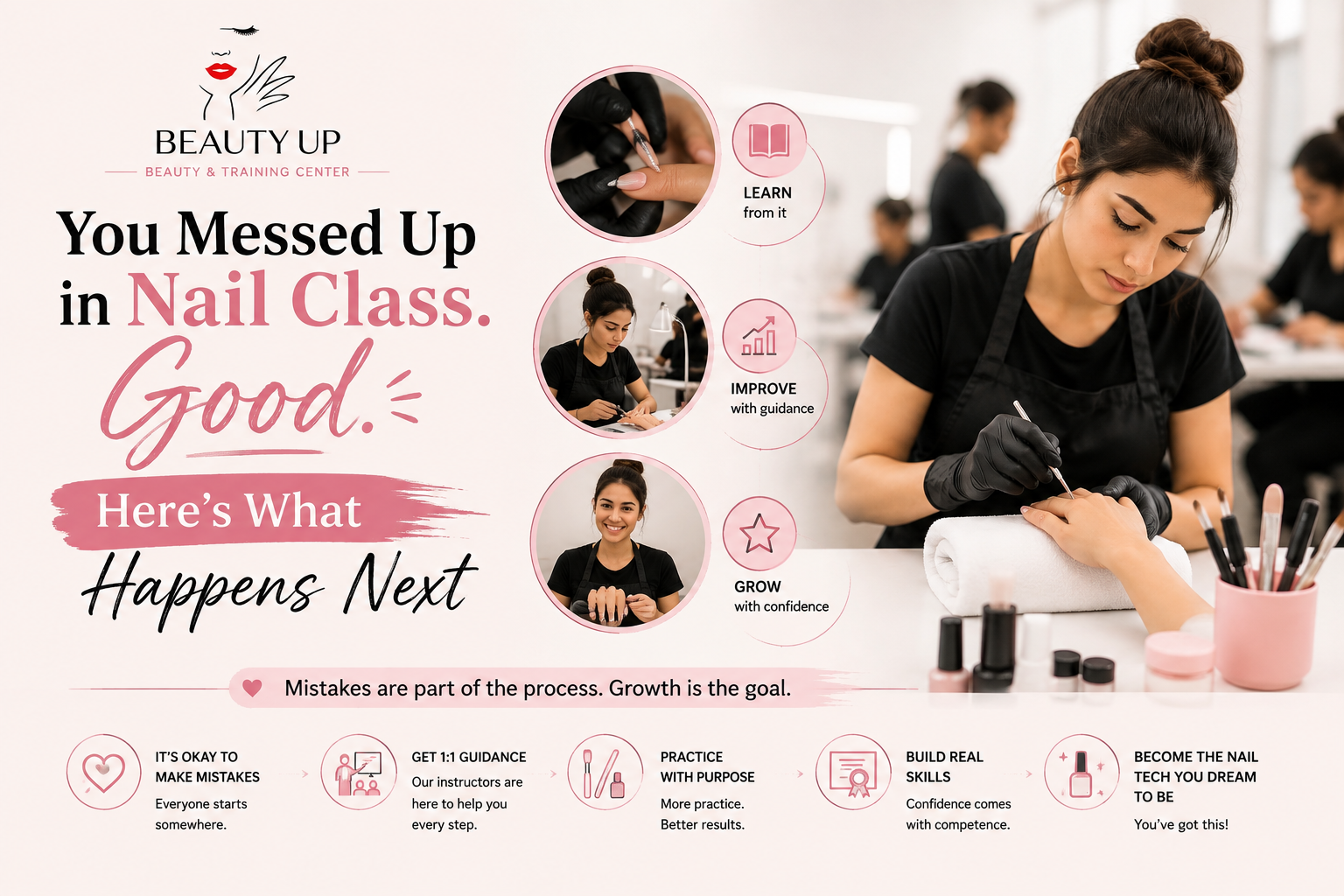
Somewhere in your training, it happened. Maybe you botched an acrylic application in front of the whole class. Maybe you filed a nail too thin, or your gel polish bubbled right before your instructor walked by. Maybe you froze completely during a practical and couldn’t remember a step you’d done a dozen times before.
Here’s what nobody tells you in that moment: this is exactly how it’s supposed to go.
Every nail technician working today, the ones with steady hands and full appointment books, made mistakes just like yours during training. Not despite becoming skilled, but because of it. Mistakes in a classroom, under supervision, with no paying client’s hands at stake, are the safest and most valuable mistakes you’ll ever make. So let’s talk about what actually happens next, and why this moment matters more than you think.
Table of Contents
Why Mistakes Are Part of the Curriculum, Not a Failure of It
Nail training isn’t designed to produce perfect results on the first try. It’s designed to expose you to every mistake you’re likely to make in a real salon, while you still have supervision, guidance, and zero financial or reputational stakes attached.
Think about it this way: would you rather struggle with cuticle work for the first time in class, with your instructor right there to correct your technique, or in front of a paying client who’s now watching you figure it out? Every stumble during nail classes Milford CT students go through is doing exactly what it’s supposed to do, building the instincts you can’t get from watching or reading alone.
What to Do Immediately After a Mistake
The instinct to spiral is real, but it’s not useful. Instead, here’s what actually helps in the moment:
- Pause and breathe before continuing. Rushing to fix a mistake often creates a second one.
- Ask your instructor what went wrong, specifically. Vague frustration doesn’t teach you anything; a clear explanation does.
- Write it down. Keeping a running list of mistakes and corrections becomes one of the most useful study tools you’ll have before your licensing exam.
- Redo it, right then if possible. Correcting an error immediately reinforces the right technique far better than moving on and revisiting it days later.
The goal isn’t to avoid feeling frustrated. It’s to make sure that frustration turns into information instead of discouragement.
How Instructors Actually View Your Errors
New students often assume instructors are silently judging every mistake. In reality, experienced instructors are watching for something completely different: how you respond. A student who gets defensive or gives up looks very different to an instructor than one who asks questions and tries again.
Instructors have seen thousands of students make thousands of mistakes. They’re not counting your errors against you, they’re evaluating whether you’re building the resilience and problem-solving skills that actually matter once you’re working independently. That shift in perspective changes everything about how these moments feel.
Turning a Mistake Into Muscle Memory
Here’s the part that surprises a lot of students: the techniques you struggled with the most in class often become the ones you’re most confident in later. That’s not a coincidence. Struggling through a technique forces a level of focus and repetition that getting it right immediately never requires.
If your gel application kept lifting, or your nail art kept smudging, the extra practice you put in because of that mistake likely built sharper technique than if you’d nailed it on the first attempt. Difficulty during training isn’t a detour from mastery, it’s often the fastest route to it.
What This Means for Your Nail Technician License
It’s worth saying clearly: mistakes during your program don’t threaten your ability to earn your nail technician license. Licensing exams test whether you can perform required techniques competently and safely, not whether you’ve ever struggled in class.
In fact, students who worked through difficult moments during training often walk into their practical exam more prepared, because they’ve already faced and corrected the exact issues that trip up unprepared candidates. The struggle earlier is what makes the exam feel manageable later.
Why the Right Program Makes All the Difference
Not every school handles student mistakes the same way. Some programs move fast and leave struggling students behind. Others, like Beauty Up, a branch of Belle Academy of Cosmetology, build in the time, patience, and individual attention that turns mistakes into genuine learning instead of lingering insecurity.
If you’re comparing beauty schools in CT and wondering which environment will actually support you through the hard parts, not just the easy wins, that’s a question worth asking directly during a tour. Our nail classes Milford CT students attend are built around exactly this philosophy: mistakes are expected, supported, and treated as part of becoming genuinely skilled.
Considering your options among beauty schools Milford CT has to offer? We’d love to show you how we do things differently, starting with how we handle the moment you mess up.
Frequently Asked Questions
+ Will making mistakes during nail training affect my ability to get licensed?
No. Licensing exams evaluate your competency and safety in required techniques, not whether you struggled during training. Many students who worked through early mistakes feel more prepared for their exam because of it.
+ What should I do right after making a mistake in class?
Pause, ask your instructor exactly what went wrong, write it down, and redo the technique immediately if possible. Fixing errors right away reinforces correct habits faster than revisiting them later.
+ Do instructors judge students harshly for mistakes?
Experienced instructors expect mistakes and focus more on how students respond to them. Asking questions and trying again is viewed far more positively than getting discouraged or giving up.
+ Can struggling with a technique actually make me better at it?
Often, yes. The extra repetition and focus required to work through a difficult technique frequently builds stronger, more reliable skills than getting it right on the first attempt.
+ How do I know if a beauty school will support me through the tough parts of training?
Ask directly during a tour how the school handles student mistakes and what kind of individual support is available. Programs like Beauty Up prioritize this kind of hands-on guidance throughout training.